Air Fryer Guides
How to Use an Air Fryer: A Beginner's Guide
How an air fryer works and how to use one: first-time setup, preheating, oil, what to cook and what to avoid, with tips for Ninja, Cosori and Gourmia models.
Quick answer
To use an air fryer, preheat it for 3–5 minutes, arrange food in a single layer in the basket, lightly oil fresh foods, set the temperature and time (usually 360–400°F180–205°C for 8–25 minutes), and shake or flip halfway through. An air fryer works like a small, powerful convection oven: a heating element and fan blow hot air around the food so it browns and crisps.
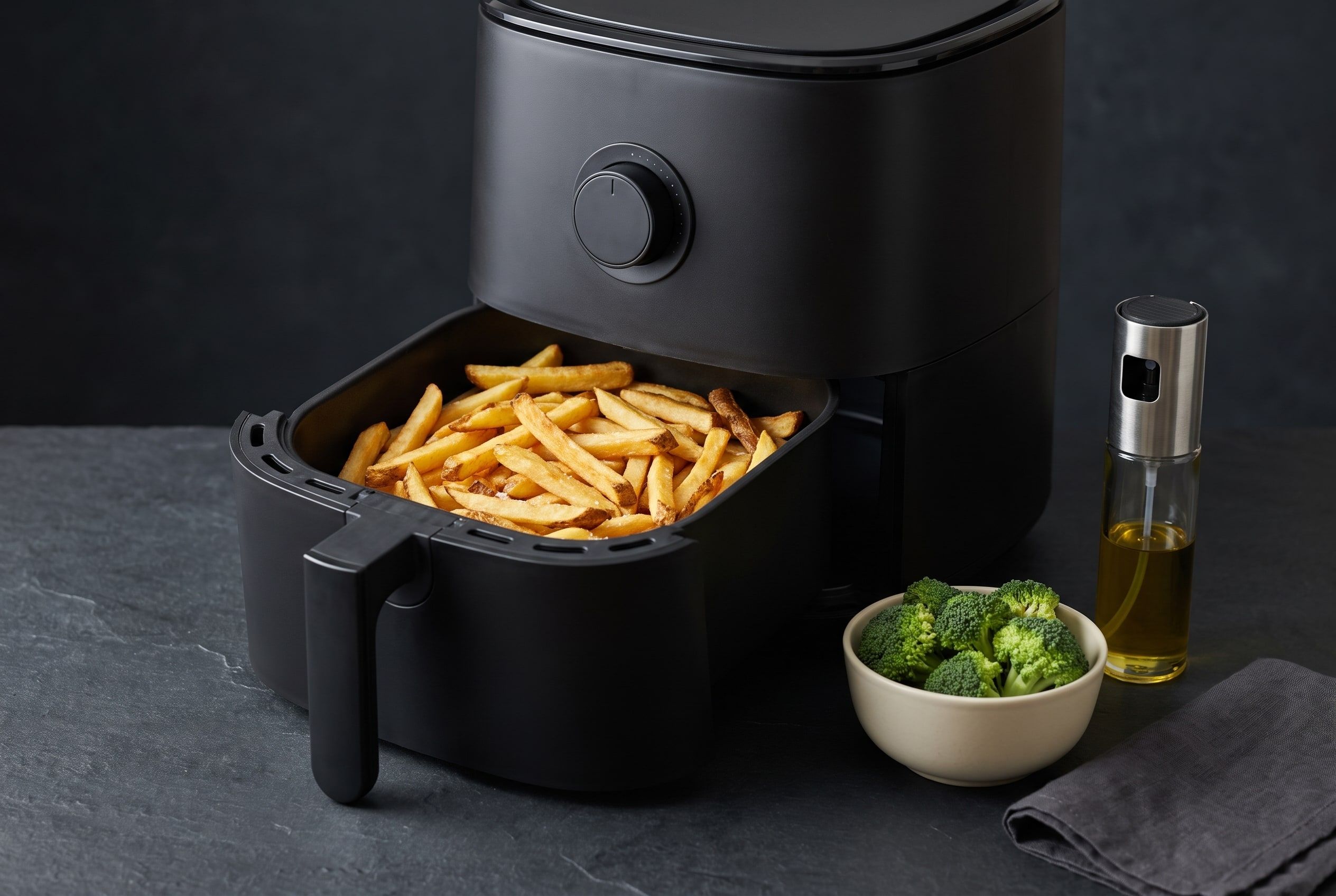
An air fryer is one of the most useful appliances in a modern kitchen, and one of the easiest to learn. If you’ve just unboxed one, this guide covers how it works, how to use it, and the handful of habits that make everything come out crisp.
How does an air fryer work?
An air fryer is a compact convection oven. A heating element sits above the basket, and a strong fan pushes the hot air down and around the food. Because the cooking chamber is small and the air moves fast, the surface of the food dries and browns quickly. That’s the crunch you’d normally get from frying, but with a teaspoon of oil instead of a pot of it.
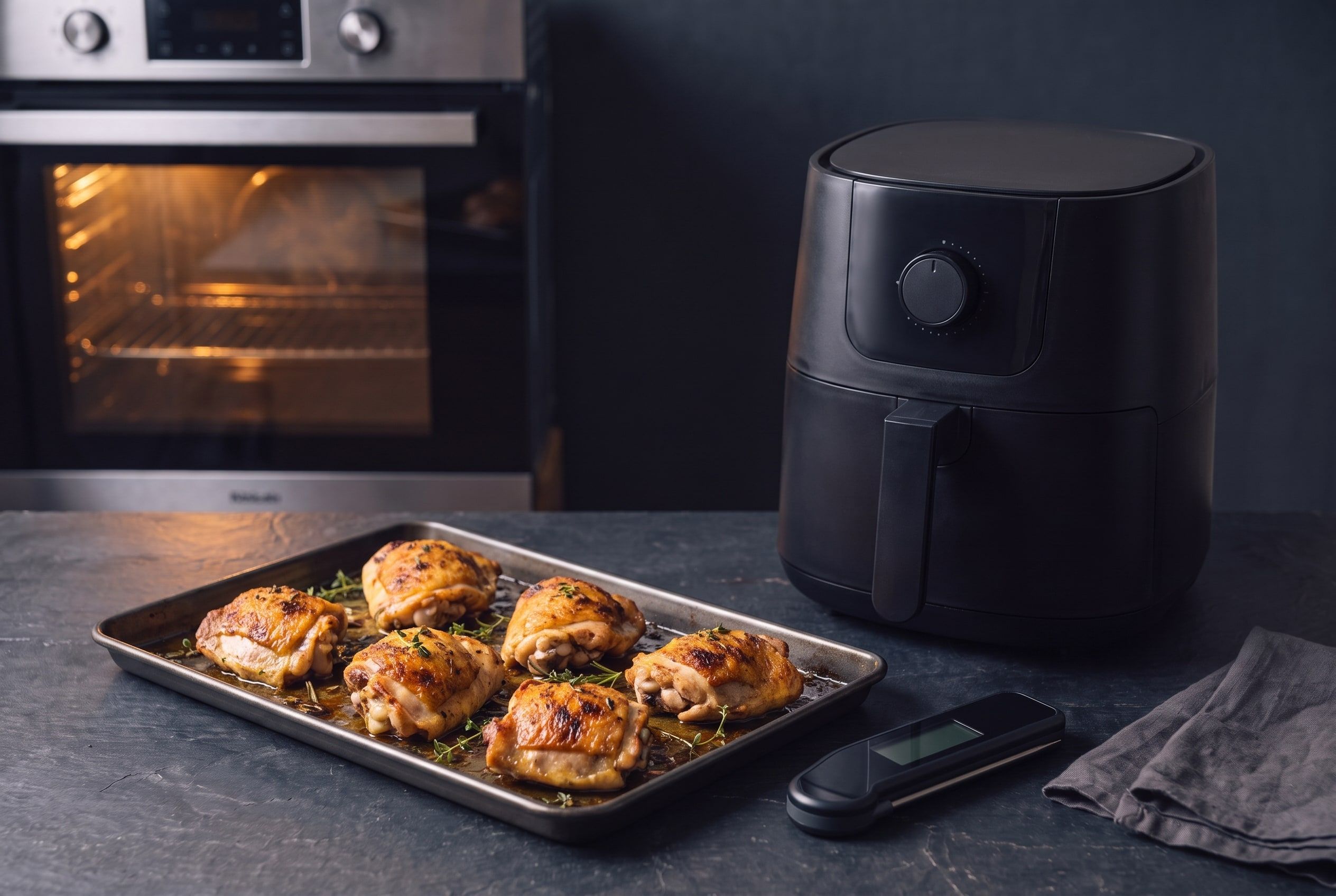
That’s also why air fryers cook faster than ovens. To adapt oven recipes, lower the temperature by 25°F and cut the time by about 20%, or use our oven to air fryer conversion calculator.
Before your first use
- Remove all packaging, including any stickers or plastic inside the basket.
- Wash the basket and tray in warm soapy water and dry them.
- Run it empty at 400°F205°C for about 10 minutes to burn off any manufacturing smell. A slight odor the first time is normal.
- Give it space. Leave at least 5 inches behind and above it for ventilation, on a heat-safe surface.
How to use an air fryer, step by step
- Preheat to the recipe temperature for 3–5 minutes.
- Prep the food. Pat fresh foods dry and toss them with a little oil and seasoning. Frozen foods go in as they are.
- Load a single layer. Leave gaps so air can move. Overcrowding is the #1 cause of soggy results.
- Set the temperature and time. Most foods cook at 360–400°F180–205°C. Our cooking times chart lists more than 100 foods.
- Shake or flip halfway. Shake small items like fries and veggies. Flip larger items like burgers and chicken.
- Check early. Start checking a couple of minutes before the time is up, and use a thermometer for meat.
Basket, dual-basket and oven-style air fryers
- Basket air fryers (2–8 qt): the most common. Pull-out drawer, fast and compact. Times on this site are written for these.
- Dual-basket air fryers: two independent drawers, so you can cook a main and a side at the same time. Most have a “sync” or “match” button so both finish together.
- Air fryer ovens: larger countertop ovens with racks, often with rotisserie and dehydrate functions. They hold more food but usually cook 1–3 minutes slower. Rotate trays halfway.
- Glass-bowl air fryers: let you watch food cook. They can run slightly slower than metal baskets.
Brand tips: Ninja, Cosori, Gourmia and more
The basics are the same across brands, but the buttons differ:
- Ninja: use Air Fry (sometimes labeled Air Crisp) for most cooking. Roast and Bake use lower fan speeds for thicker foods and baked goods. On dual-zone models, Sync makes both baskets finish together.
- Cosori: presets are a starting point. You can adjust the time and temperature after choosing one. Many models have a shake reminder.
- Gourmia: many models have a preheat step built into the presets, and the timer starts after preheating.
- Instant Vortex: shows “Turn Food” halfway through, so open the basket and flip or shake.
Whatever the brand, it’s worth reading the manual’s section on maximum fill lines, accessories and whether the basket is dishwasher-safe.
What to cook first
If you’re new to air frying, start with foods that succeed easily and show what the air fryer does best:
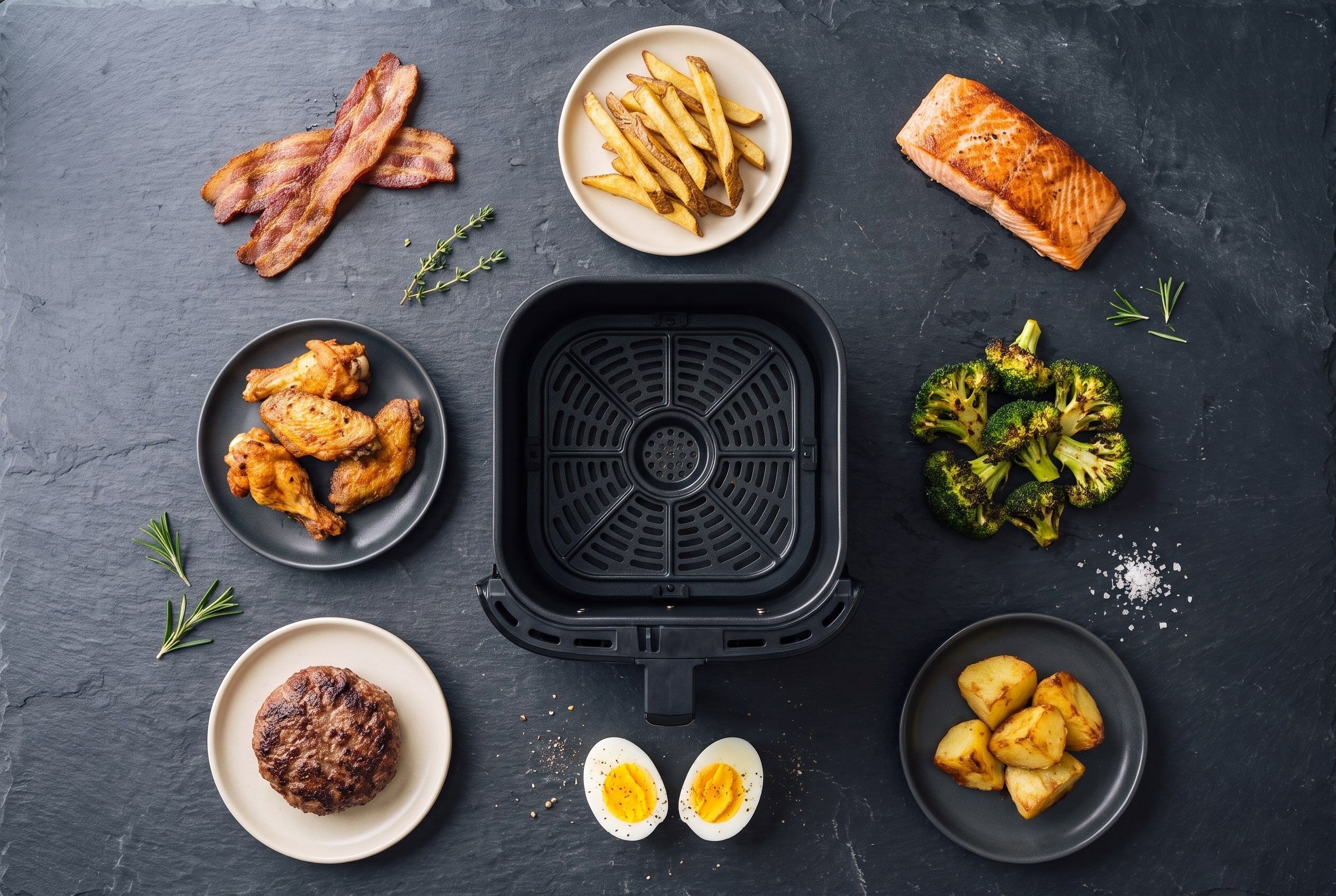
- Bacon, crisp in 8–10 minutes with no splatter
- Crispy roasted potatoes, golden in about 20 minutes
- Hard boiled eggs, with no pot of water
- Frozen favorites: fries, nuggets, mozzarella sticks and frozen burgers
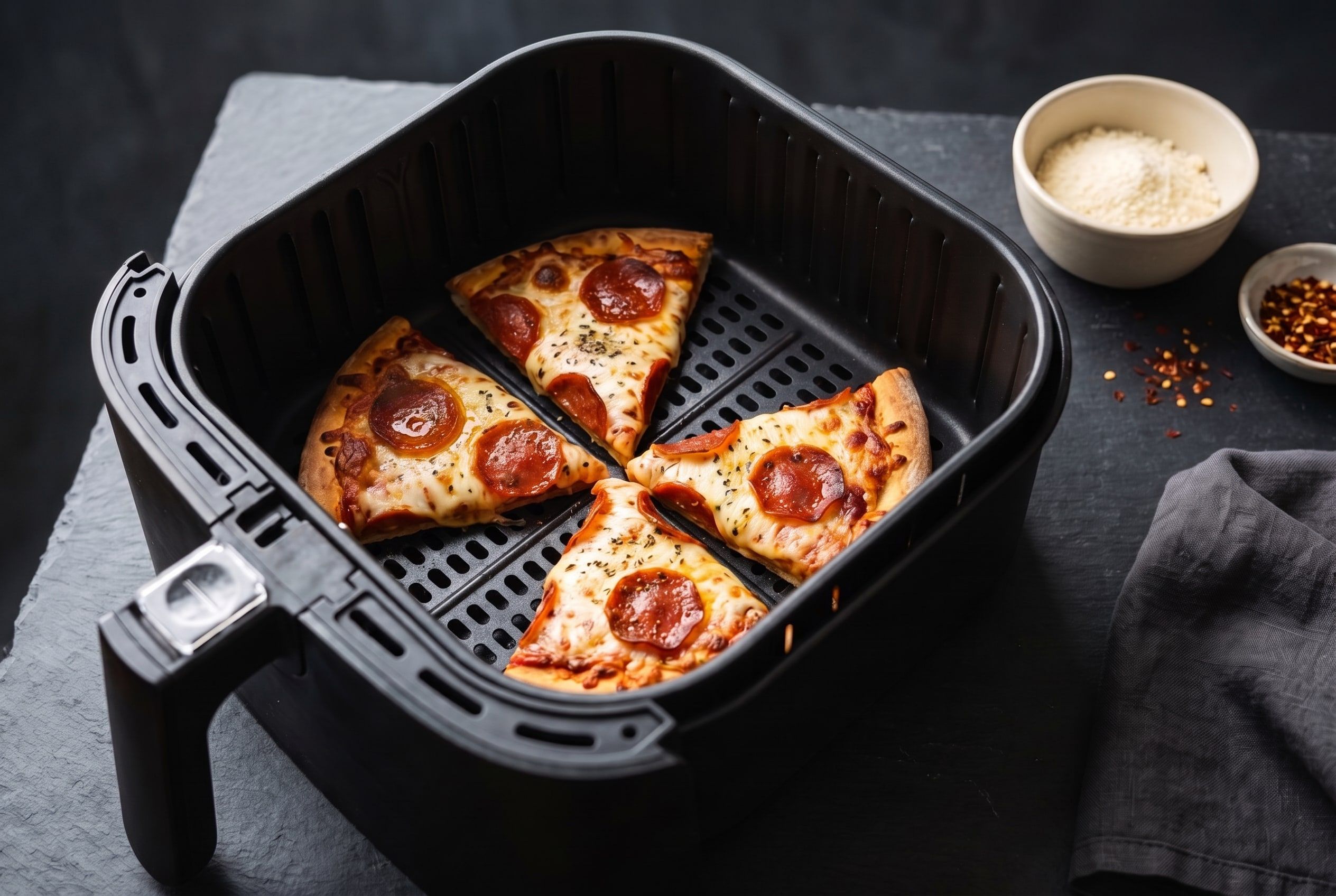
- Leftovers: pizza, fries and fried chicken reheat far better than in the microwave
Common mistakes to avoid
- Overcrowding the basket. Cook in batches instead.
- Using too much oil. It pools and smokes. A light coat is enough.
- Skipping the shake. Food touching the basket browns less.
- Forgetting to clean the drawer. Built-up grease smokes and smells.
- Using wet batters. They drip through before they set. Use a flour, egg and breadcrumb coating instead.
Cleaning your air fryer
Let it cool, then wash the basket and tray after each use with warm soapy water and a soft sponge. Avoid steel wool, which scratches nonstick coatings. For stuck-on grease, soak the basket in hot soapy water for 15 minutes. Wipe the inside of the unit with a damp cloth, and check under the heating element occasionally for splatter.
Frequently asked questions
How does an air fryer work?
An air fryer has a heating element at the top and a powerful fan that circulates very hot air around food in a perforated basket. The moving air dries and browns the surface quickly, creating a crisp outside similar to frying, using little or no oil.
Do you need to preheat an air fryer?
Preheating for 3–5 minutes gives more consistent results and better browning, and most recipes assume it. Some models preheat automatically. If you skip it, add 2–3 minutes to the cook time.
Do you put oil in an air fryer?
Don't pour oil into the basket. Lightly coat the food instead: ½–1 teaspoon tossed with vegetables or potatoes, or a light spray on breaded foods. Frozen breaded foods and fatty meats like bacon need no oil.
Can I use aerosol cooking spray in my air fryer?
Many manufacturers advise against aerosol sprays, because the propellants can damage nonstick coatings over time. Use a refillable pump oil mister, or brush the oil on.
Can you put aluminum foil or parchment paper in an air fryer?
Yes, as long as food weighs it down and it doesn't cover the whole basket. Air needs to circulate. Never preheat with loose parchment or foil inside, because it can fly into the heating element.
What should you not cook in an air fryer?
Avoid wet batters, large amounts of loose cheese, lightweight leafy greens that blow around, uncovered liquids, and foods too big to leave space around them. Popcorn kernels and loose seasonings can also be blown into the heating element.
How much electricity does an air fryer use?
Most air fryers draw about 1,200–1,800 watts. Because they heat quickly and cook faster than a full-size oven, they usually use less energy for small meals.
Is an air fryer healthier than deep frying?
Air frying uses far less oil than deep frying, which usually means fewer calories and less fat for the same food. How healthy a meal is still depends on what you cook.
You might also like
Air Fryer Cooking Times Chart
Searchable, printable times and temps for 100+ foods.
Oven to Air Fryer Conversion Calculator
Convert any oven recipe to air fryer time and temperature.
How to Reheat Food in an Air Fryer (Times Chart)
Reheat leftovers in the air fryer at 350°F for 3–5 minutes for most foods. A time chart for pizza, fried chicken, ribs, fries, baked potatoes, bacon and more.
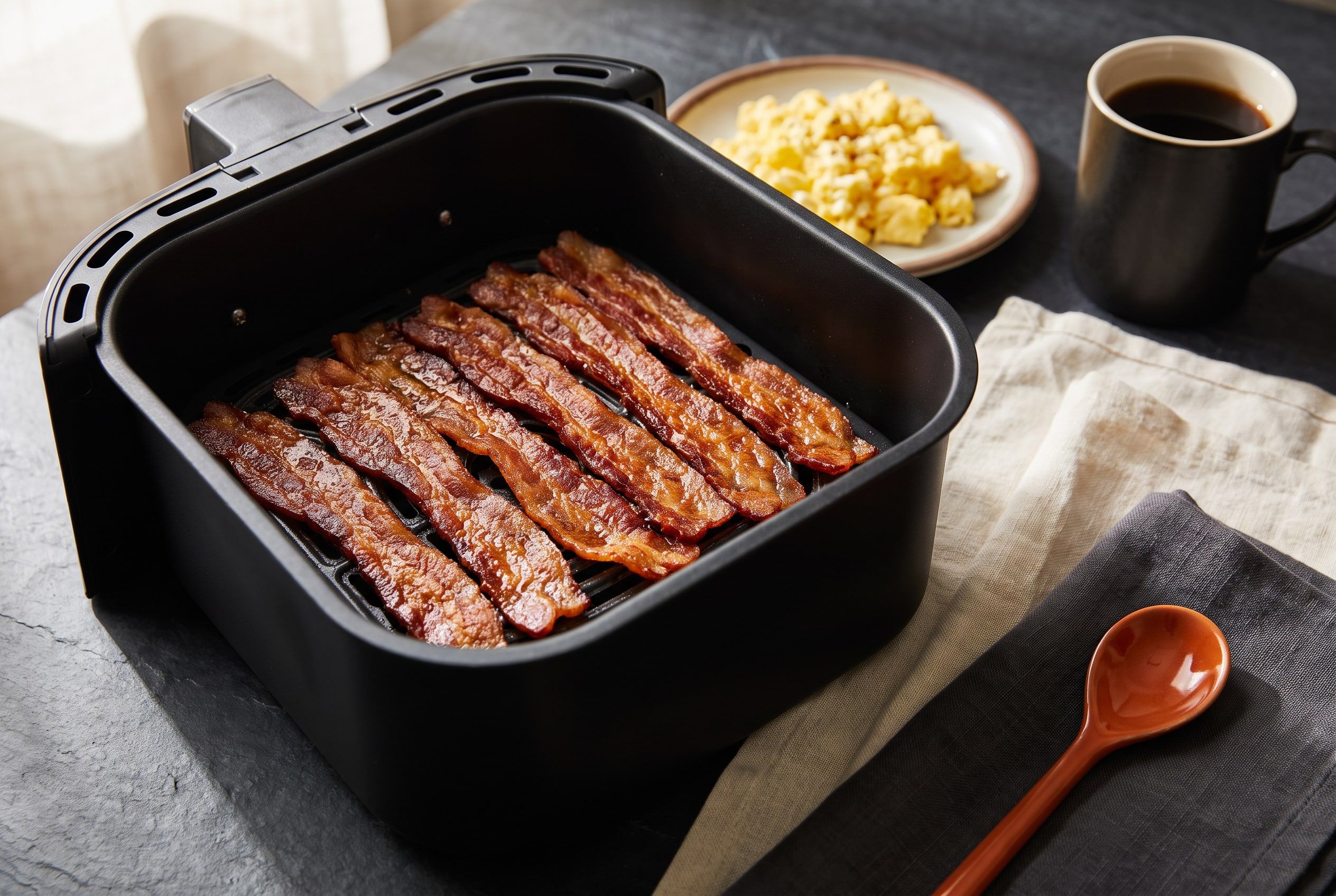
Air Fryer Bacon: Crispy in 8–10 Minutes
How to cook bacon in the air fryer: 400°F for 8–10 minutes for regular slices or 10–14 minutes for thick-cut, with tips to stop smoke and splatter.
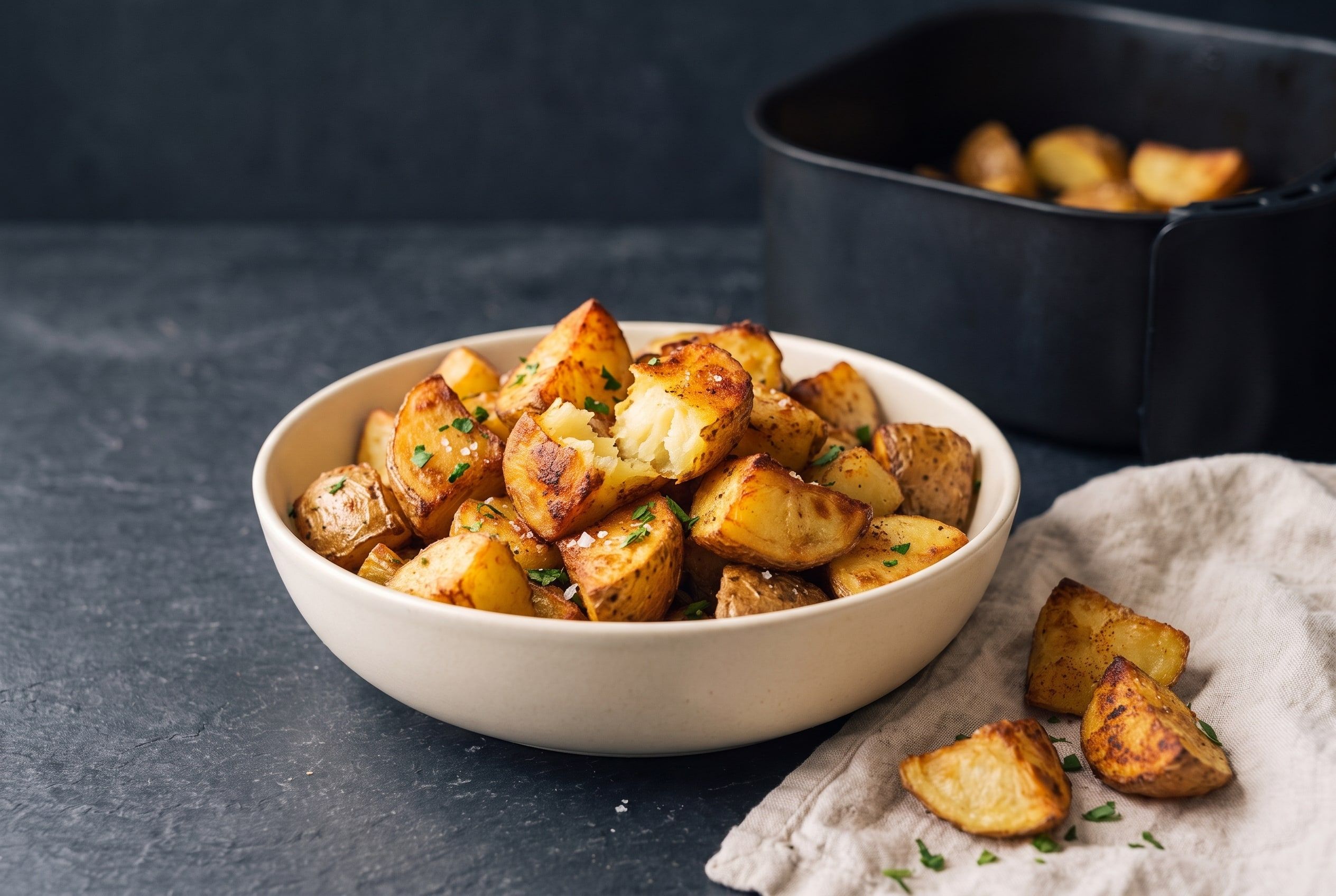
Air Fried Potatoes: Crispy and Golden in 20 Minutes
Crispy air fried potatoes: cut into 1-inch chunks, toss with oil and seasoning, and air fry at 400°F for 18–22 minutes, shaking every 6–7 minutes.
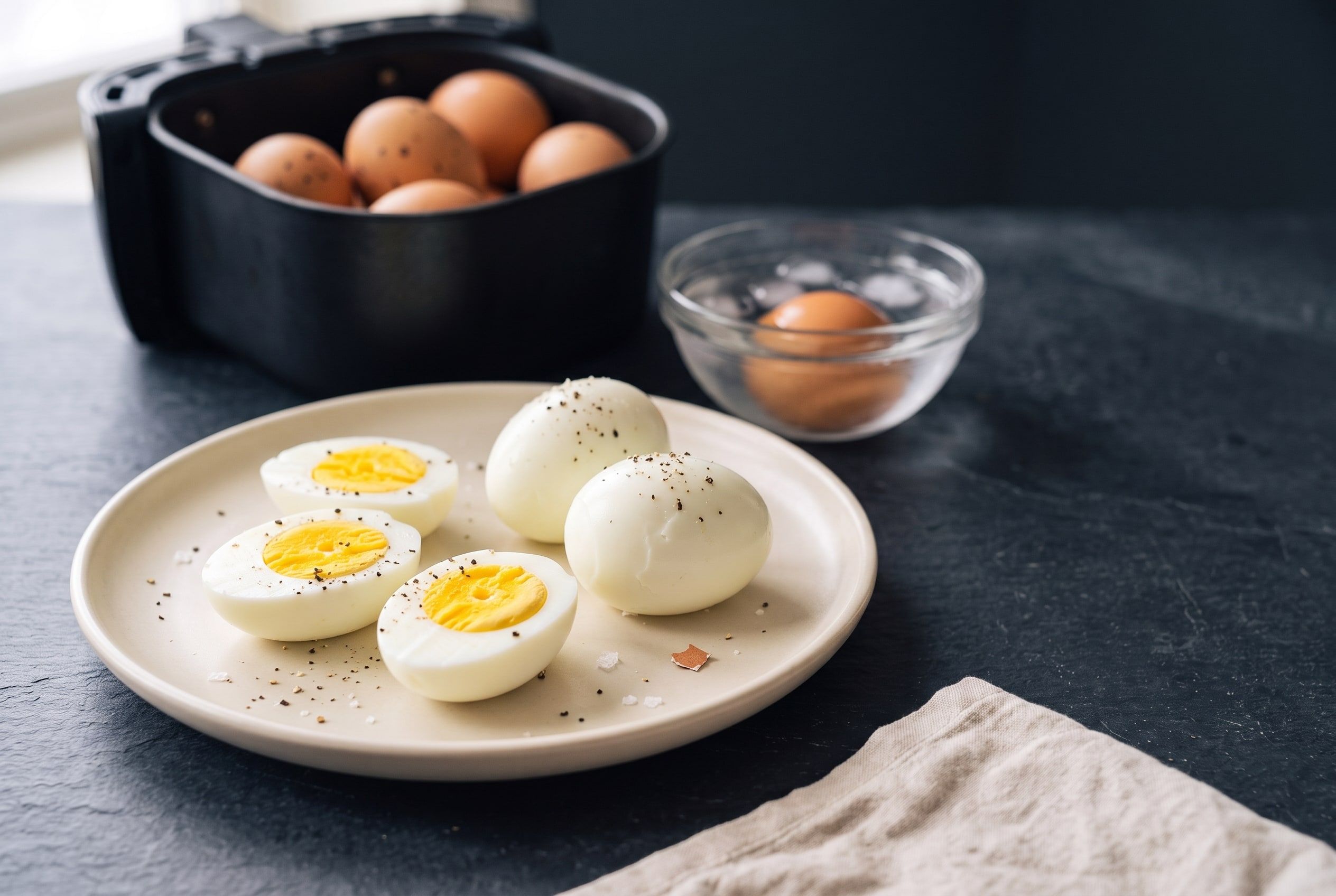
Air Fryer Hard Boiled Eggs (No Water Needed)
Make hard boiled eggs in the air fryer at 270°F for 15–17 minutes, then chill in ice water. Times for soft, jammy, medium and hard eggs.