Air Fryer Guides
Are Air Fryers Toxic? Nonstick Coatings, PFAS and What to Know
Are air fryers toxic? What we know about nonstick coatings, PFAS, PFOA, BPA, acrylamide and "radiation", plus how to use one safely and non-toxic options to look for.
Quick answer
Air fryers aren't toxic when used normally. Most have a PTFE (Teflon-type) nonstick coating, which is stable at air fryer temperatures of up to about 400–450°F205–230°C and only starts to break down above roughly 500°F260°C. Air fryers sold in the US since about 2015 are made without PFOA. If you'd rather avoid PFAS entirely, choose a stainless steel, ceramic-coated or glass air fryer, and replace any basket whose coating is scratched or flaking.
Air fryers have a reputation for healthier cooking, so it’s unsettling to see headlines asking whether they’re toxic. The short answer is no: an air fryer used normally is a safe appliance. The questions people have are mostly about the nonstick coating, and they’re worth understanding so you can choose and use one with confidence.
What’s in an air fryer basket?
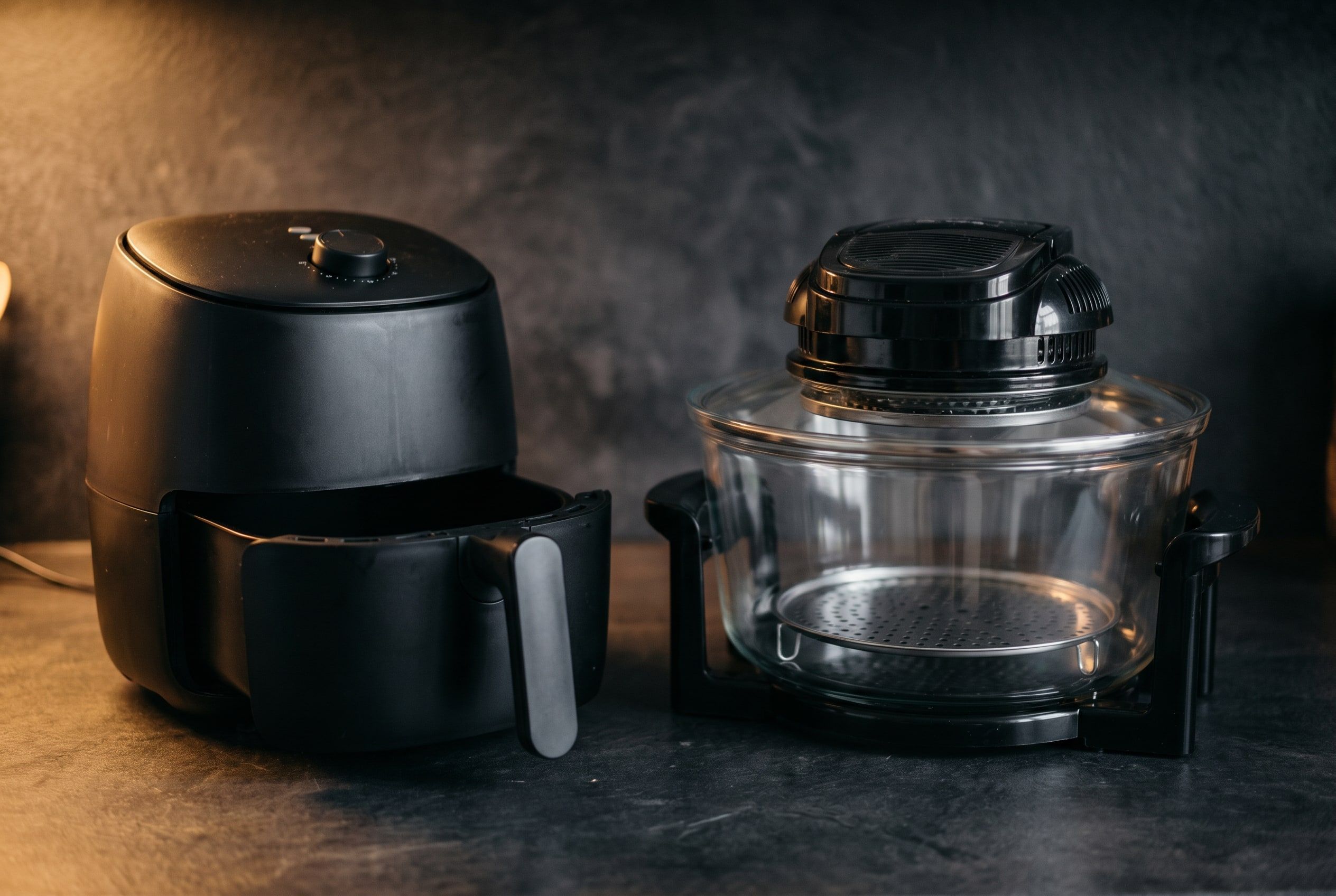
The parts that touch food are the basket, the crisper plate or tray, and the drawer. Most are made of one of these:
- PTFE nonstick coating (often called Teflon): the most common. Very nonstick and easy to clean.
- Ceramic nonstick coating: a silica-based (sol-gel) coating with no PTFE. Marketed as PFAS-free.
- Stainless steel: no coating at all. Food sticks more, so a little oil or a liner helps.
- Glass: a glass bowl, used in a few newer models. No coating, and you can watch the food cook.
The outer housing is usually plastic, but it doesn’t touch the food.
Nonstick coatings and heat
PTFE is stable at normal cooking temperatures. It starts to break down at about 500°F260°C, and gives off significant fumes at about 570°F300°C and above. Most air fryers top out at 400–450°F205–230°C, which keeps the coating well below those temperatures.
Overheating mostly happens when an empty nonstick pan sits on a hot stove, which isn’t how air fryers work. Even so, it’s sensible to:
- Not run the air fryer empty for long periods, apart from a short preheat or the first burn-off.
- Replace a basket with a scratched, peeling or flaking coating. Most brands sell replacement baskets.
- Use soft tools. Silicone-tipped tongs and wooden or silicone spatulas protect the coating.
- Keep pet birds out of the kitchen while you cook. Birds are especially sensitive to fumes from overheated nonstick coatings.
PFOA, PFAS and “forever chemicals”
PFOA was once used to make PTFE coatings. US manufacturers phased it out by 2015 under an EPA program, so a “PFOA-free” label is now standard and doesn’t tell you much.
PFAS is the broader family of fluorinated “forever chemicals,” and PTFE is usually counted as one. If you want to avoid PFAS completely, look for air fryers with stainless steel, glass or ceramic-coated cooking surfaces, and check the product details for “PTFE-free.”
BPA and plastic parts
In most air fryers, the food only touches metal or glass. The plastic housing and handle stay outside the cooking chamber. Many brands also label their air fryers BPA-free. If plastic contact concerns you, avoid accessories or inserts made of plastic that isn’t rated for high heat.
That new air fryer smell
A plastic or chemical smell during the first few uses is common, as coatings and manufacturing oils burn off. Wash the basket and run the empty air fryer at about 400°F205°C for 10–15 minutes with a window open. The smell should fade after a use or two.
Is air frying healthy?
Air frying uses a tablespoon or two of oil, or none, instead of a pot of it. That makes air fried food much lower in fat and calories than deep-fried food.
Acrylamide, a compound that forms when starchy foods brown at high heat, is the other topic people ask about. It forms in any high-heat cooking, including baking, roasting and frying. To keep it low, cook potatoes and bread to golden rather than dark brown, and soak cut potatoes in water for 15–30 minutes before air frying.
How to use an air fryer safely
- Ventilate. Use it under a range hood or near an open window, and leave space around the air vents.
- Keep it clean. Built-up grease is the usual cause of smoke. See our guide to cleaning an air fryer.
- Use foil and parchment correctly. Keep food on top of them, and don’t preheat with them inside. See foil in the air fryer and parchment and liners.
- Skip abrasive cleaners. Steel wool and oven cleaner damage coatings.
Choosing a non-toxic air fryer
If you’re buying a new air fryer and want the lowest-concern option:
- Stainless steel basket: durable, with no coating to wear off.
- Glass bowl: no coating, and dishwasher-safe.
- Ceramic coating: PFAS-free and nonstick. It’s gentle-care only, and the nonstick quality fades faster than PTFE.
Look for “PTFE-free” or “PFAS-free” in the product details, not just “PFOA-free.”
Frequently asked questions
Are air fryers toxic?
No, not when they're used as intended. The main concern is the nonstick coating, and the common PTFE coatings are stable at the temperatures air fryers reach. Problems start only with severe overheating, far above normal cooking temperatures, or with coatings that are badly scratched or peeling.
Do air fryers have Teflon?
Many do. Teflon is a brand name for PTFE, the most common nonstick coating on air fryer baskets. Some air fryers use ceramic coatings, stainless steel or glass instead. The product listing or manual usually says which coating a model uses.
What is a PFAS-free air fryer?
PFAS are a large family of fluorinated chemicals, and PTFE is usually counted as one of them. A PFAS-free air fryer has no PTFE coating on the parts that touch food. Instead, it uses stainless steel, glass or a ceramic (sol-gel) nonstick coating. "PFOA-free" is different: it means the coating was made without PFOA, but it can still be PTFE.
What is the safest air fryer material?
Stainless steel and glass have no coating to wear off, so they're the lowest-concern options. Ceramic coatings avoid PFAS but tend to lose their nonstick quality faster. PTFE is the most nonstick and is safe when used correctly, but it needs gentle care so it doesn't scratch.
Do air fryers give off radiation?
No harmful radiation. An air fryer heats with an electric element, like a small oven, and a fan blows the hot air around. The heat is infrared, the same as any oven or toaster. Air fryers don't use microwaves or any kind of ionizing radiation.
Why does my new air fryer smell like plastic?
New air fryers often smell for the first few uses as manufacturing residue burns off. Wash the basket, then run the empty air fryer at about 400°F205°C for 10–15 minutes in a ventilated room before cooking. If a strong chemical smell continues after several uses, contact the manufacturer.
Is air fried food bad for you?
Air frying uses far less oil than deep frying, so air fried food usually has less fat and fewer calories. Like any high-heat cooking, it can form acrylamide in starchy foods such as fries. Cooking potatoes to golden rather than dark brown keeps it lower.
You might also like
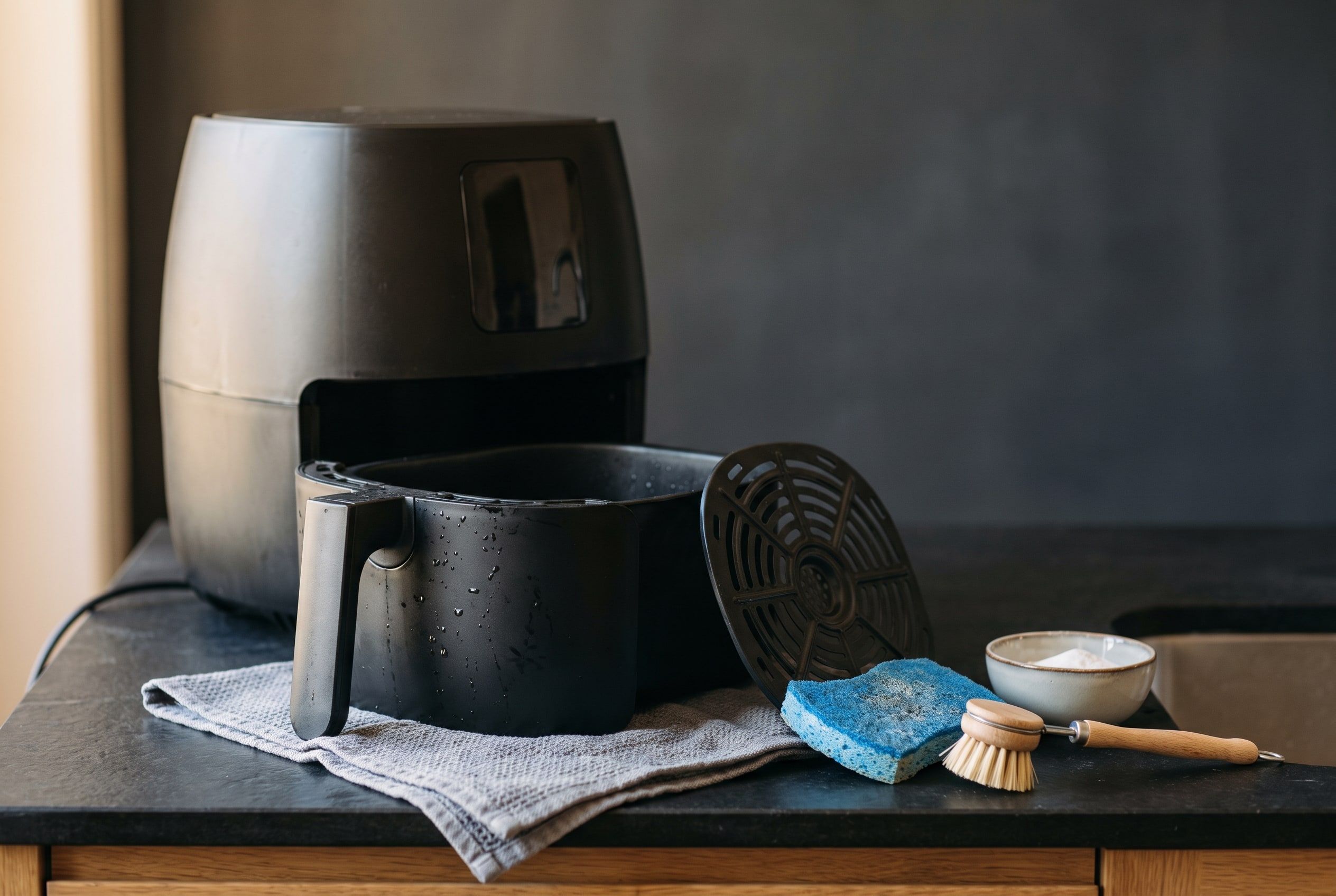
How to Clean an Air Fryer: Basket, Inside and Heating Element
How to clean an air fryer: the basket after every use, baked-on grease with baking soda, the inside and heating element, and whether the basket can go in the dishwasher.
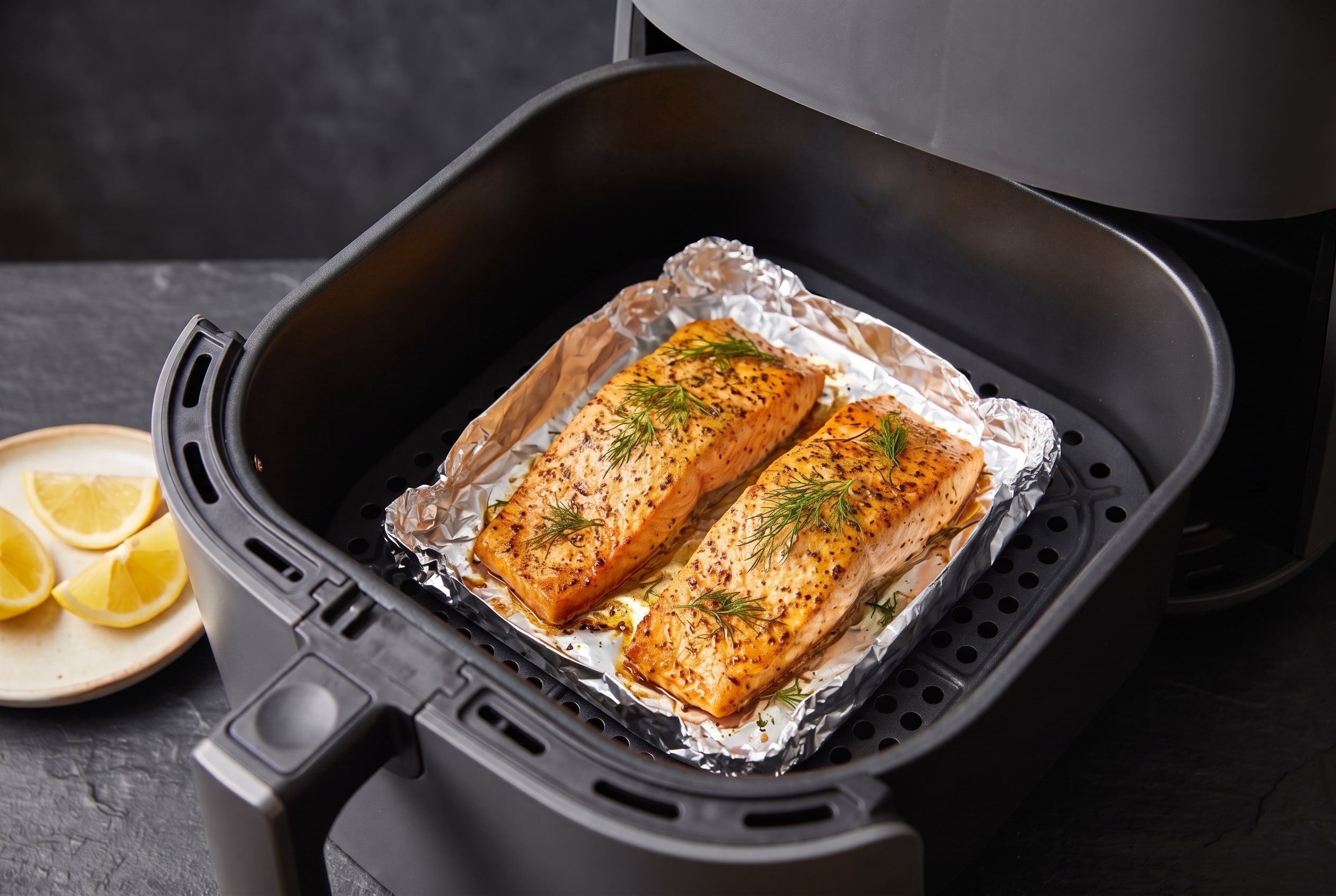
Can You Put Foil in an Air Fryer? Yes, If You Do It Right
Yes, you can put aluminum foil in an air fryer if food weighs it down and air can still flow. When to use foil, when to use parchment instead, and what to avoid.
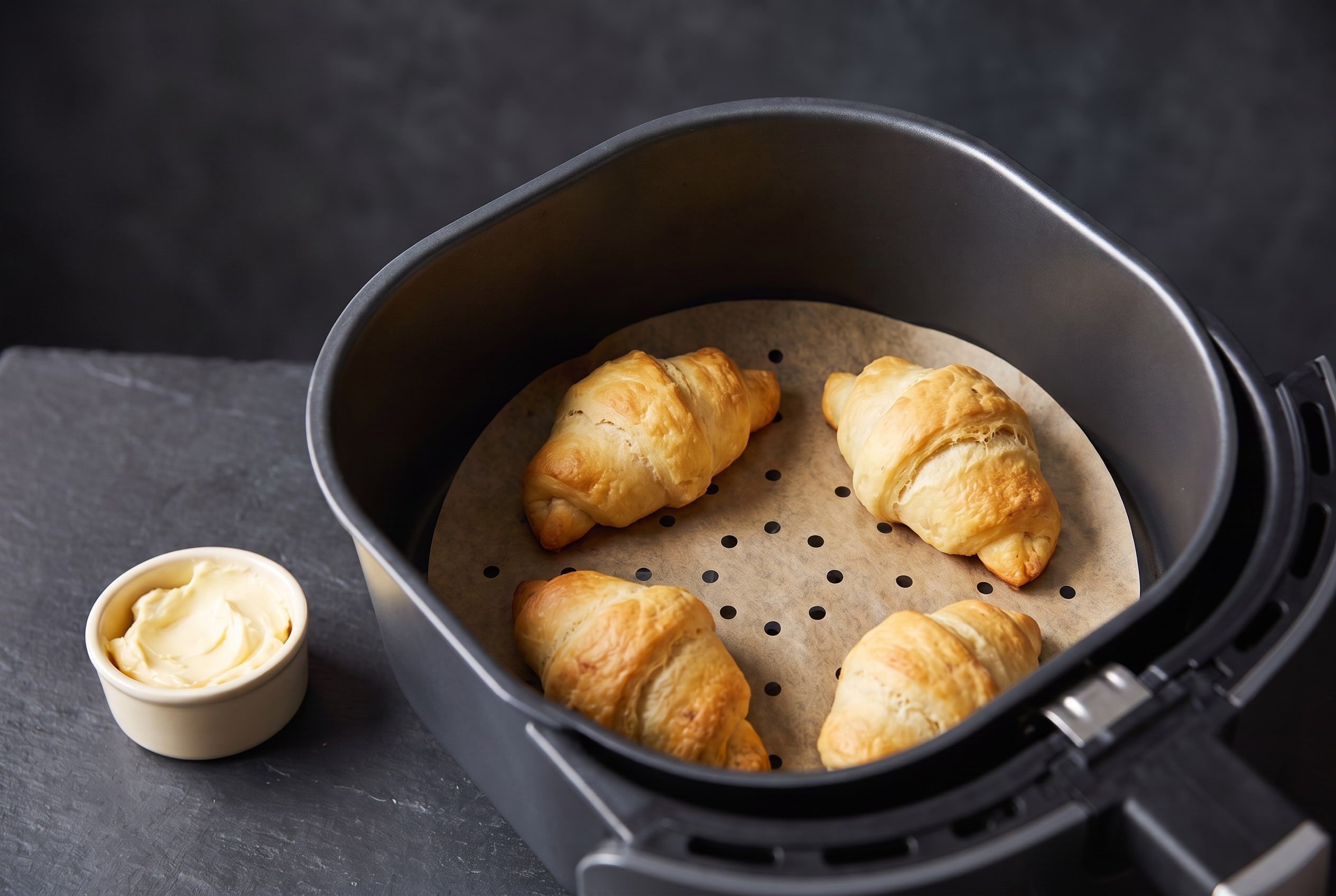
Parchment Paper and Liners in the Air Fryer: What's Safe and What Works
Yes, you can use parchment paper in an air fryer if food weighs it down. Perforated vs plain, silicone vs disposable liners, sizes, and why wax paper is a no.
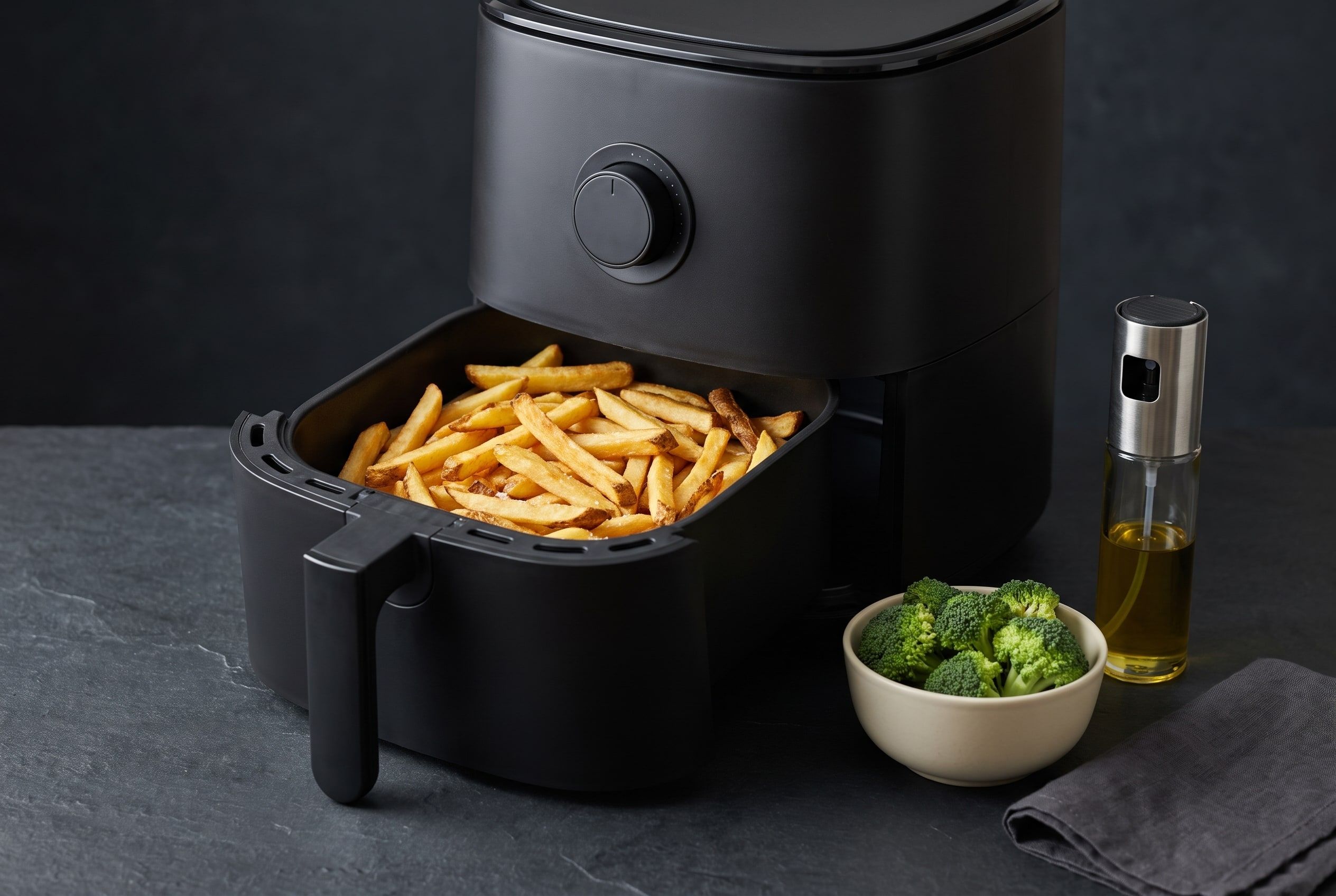
How to Use an Air Fryer: A Beginner's Guide
How an air fryer works and how to use one: first-time setup, how to preheat (and for how long), oil, what to cook and what to avoid, with Ninja, Cosori and Gourmia tips.
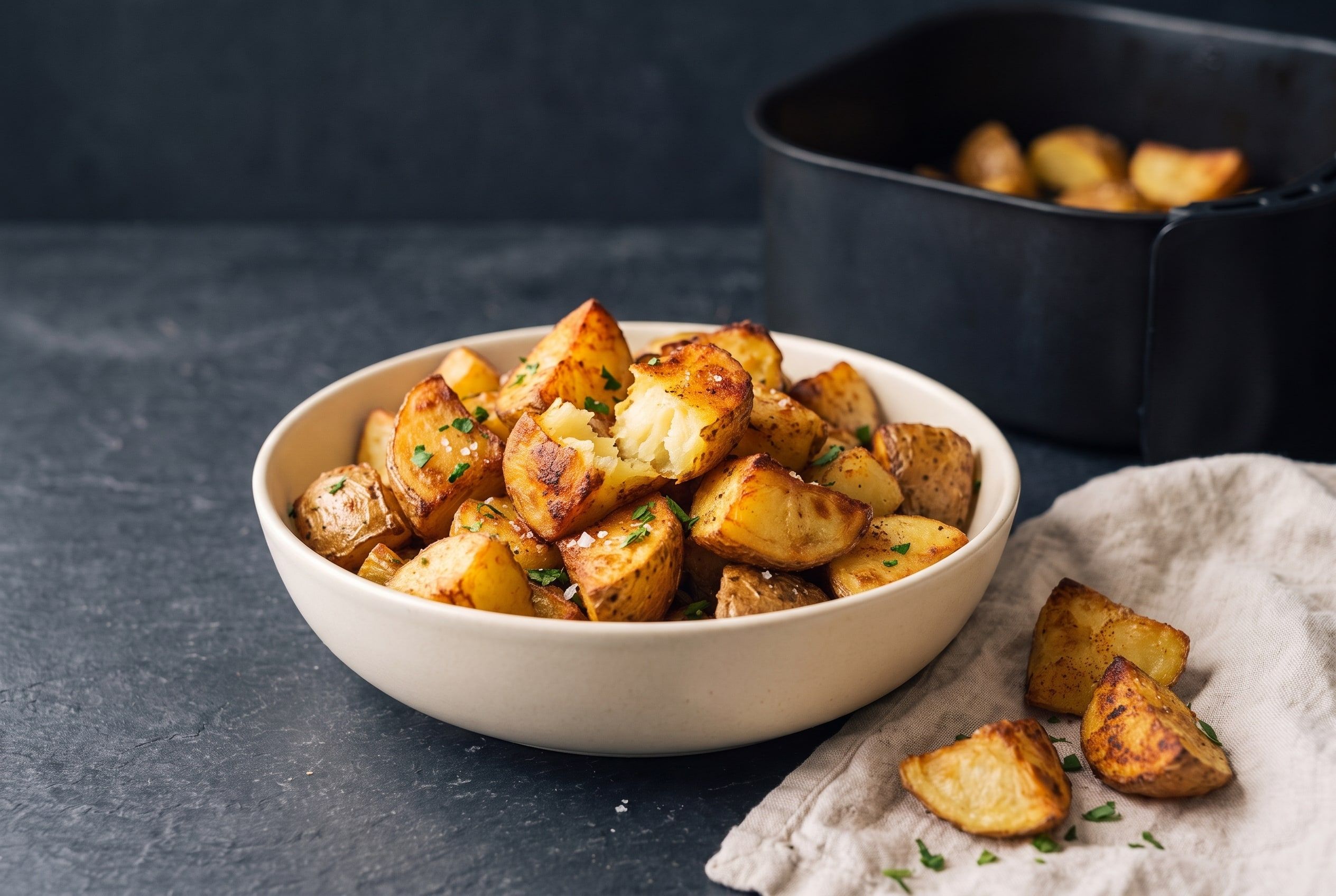
Air Fried Potatoes: Crispy and Golden in 20 Minutes
Crispy air fried potatoes: cut into 1-inch chunks, toss with oil and seasoning, and air fry at 400°F for 18–22 minutes, shaking every 6–7 minutes.
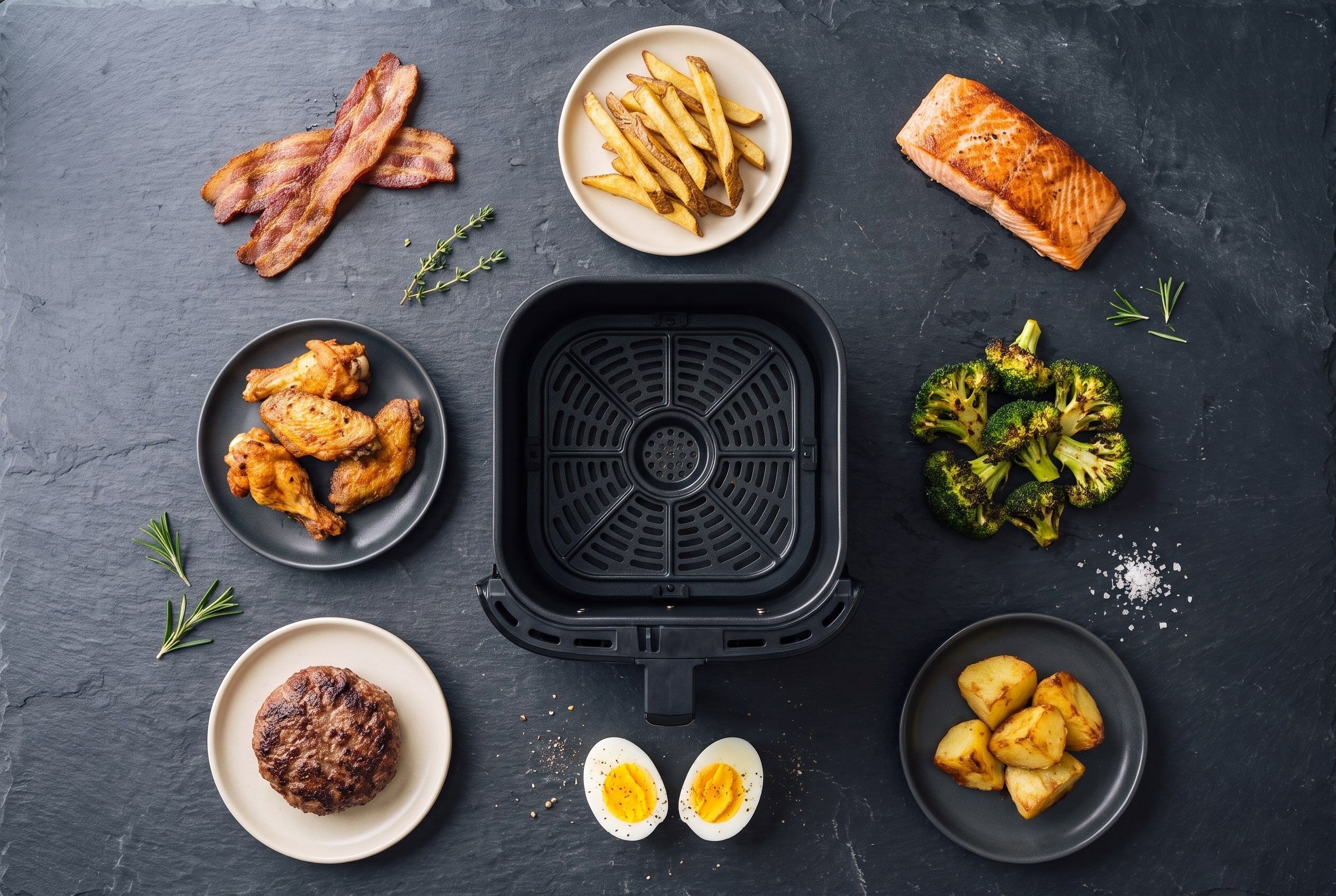
Air Fryer Cooking Times Chart
Searchable, printable times and temps for 100+ foods.